Providing Economic Development, Geographic Information Systems, Intergovernmental Cooperation, Land Use Planning and Transportation Assistance since 1973
A primary reason for a community to prepare a comprehensive plan is to establish a framework for the future, especially as it relates to decisions regarding growth and regulation of development to protect and maintain the health, safety and welfare of the community. A plan also helps to set priorities for public expenditures.
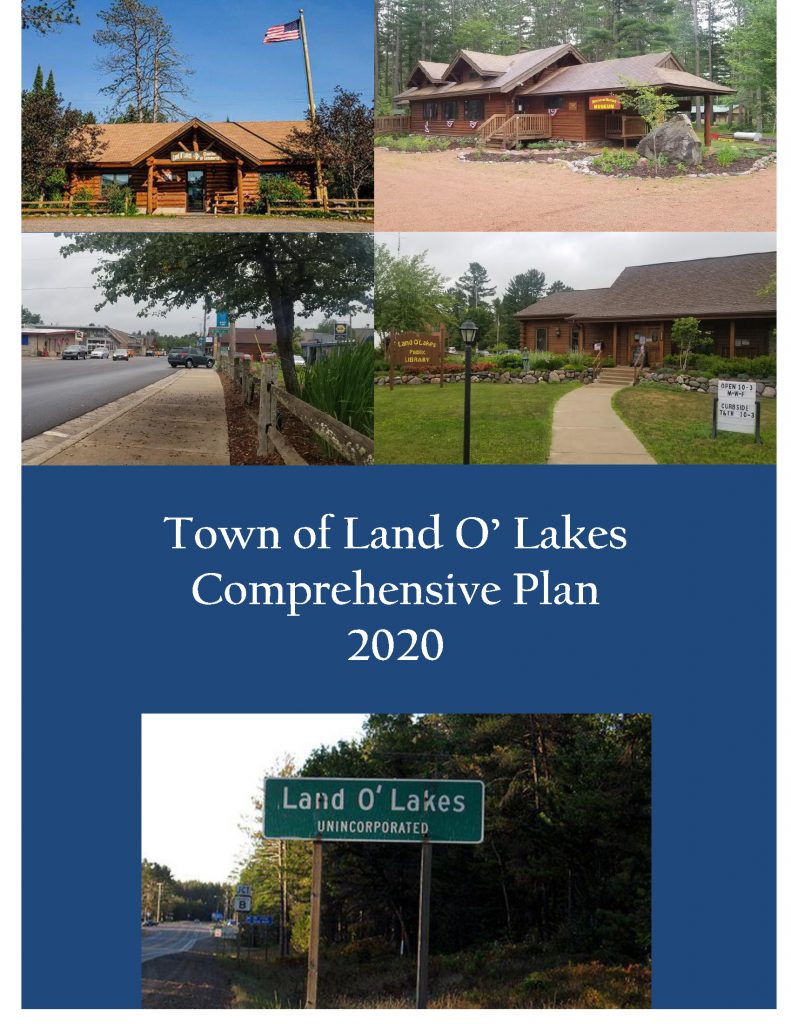
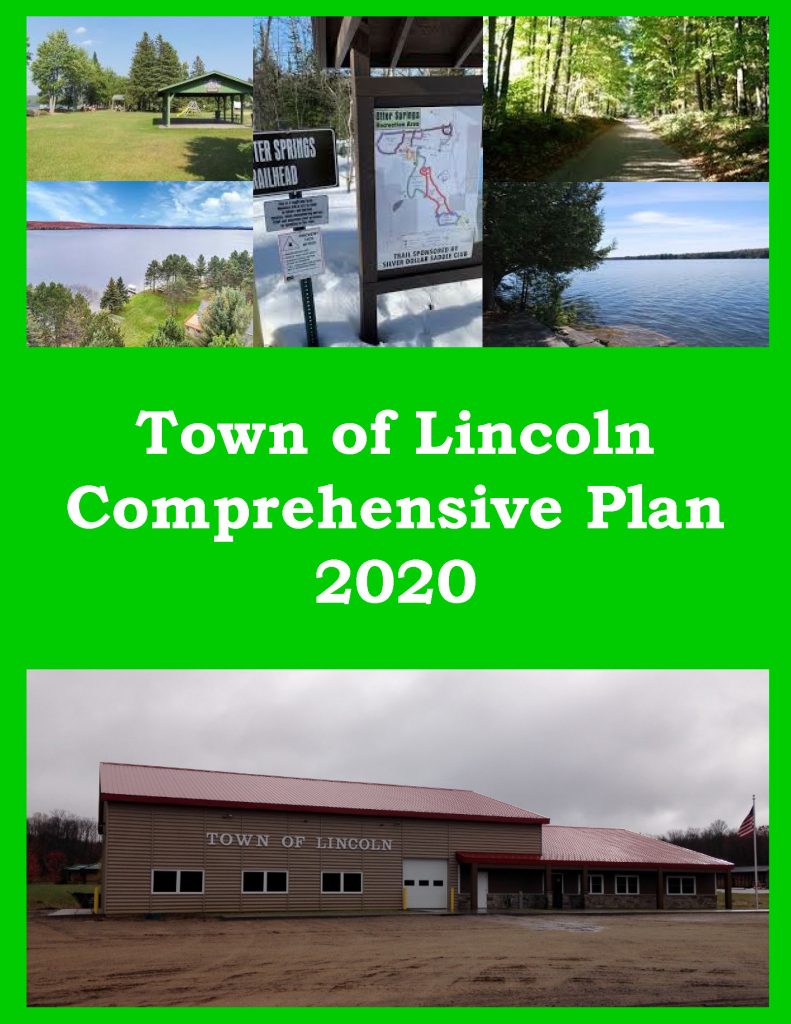
The Town of Lincoln Comprehensive Plan is a compilation of historical data, and community created goals, objectives, and policies to guide future planning and community land use decisions for a 20-year period.
The comprehensive plan law (§66.1001 WI Stats.) defines the contents of a local comprehensive plan, which has nine chapters—Issues & Opportunities; Natural, Cultural, & Agricultural Resources; Housing; Transportation; Economic Development; Land Use; Utilities & Community Facilities; Intergovernmental Cooperation; and Implementation. Population, housing, and land use projections are also required in 5-year increments for 20 years. Locally created goals, objectives, and policies are also part of each comprehensive plan chapter.
According to §66.1001 WI Stats., if a town, village, city, or county engages in official mapping, subdivision regulation, or zoning, those actions must be consistent with that community’s comprehensive plan.
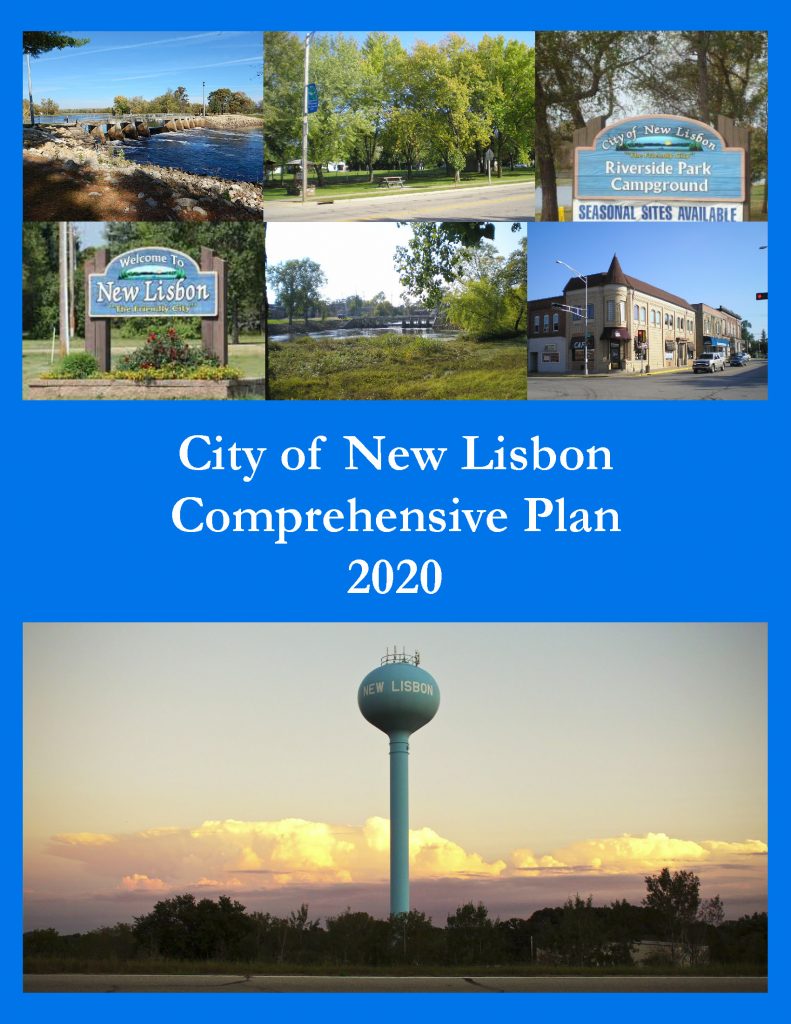
The City of New Lisbon Comprehensive Plan is a compilation of historical data and community created goals, objectives, policies, and programs that will guide future planning and community decisions for a 20-year period. Comprehensive plans incorporate a twenty-year vision and provide a rational basis for local land use decisions.
The comprehensive plan law (§66.1001 WI Stats.) defines the contents of a local comprehensive plan, which has nine chapters—Issues & Opportunities; Natural, Cultural, & Agricultural Resources; Housing; Transportation; Economic Development; Land Use; Utilities & Community Facilities; Intergovernmental Cooperation; and Implementation. Population, housing, and land use projections are also required in 5-year increments for 20 years. Locally created goals, objectives, and policies are also part of each comprehensive plan chapter.
According to §66.1001 WI Stats., if a town, village, city, or county engages in official mapping, subdivision regulation, or zoning, those actions must be consistent with that community’s comprehensive plan.
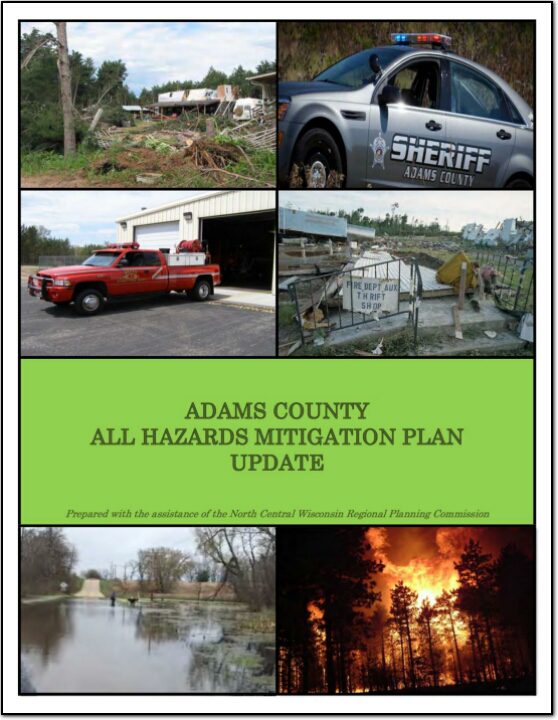
Adams County All Hazards Mitigation Plan (AHMP) Update describes and documents the process used to develop the plan update. This includes how it was prepared and who (committee, organizations, departments, staff, consultants, etc.) was involved in the update process. It also describes the local government involvement, the time period in which the update was prepared, and who to contact to answer questions and make recommendations for future amendments to the plan.
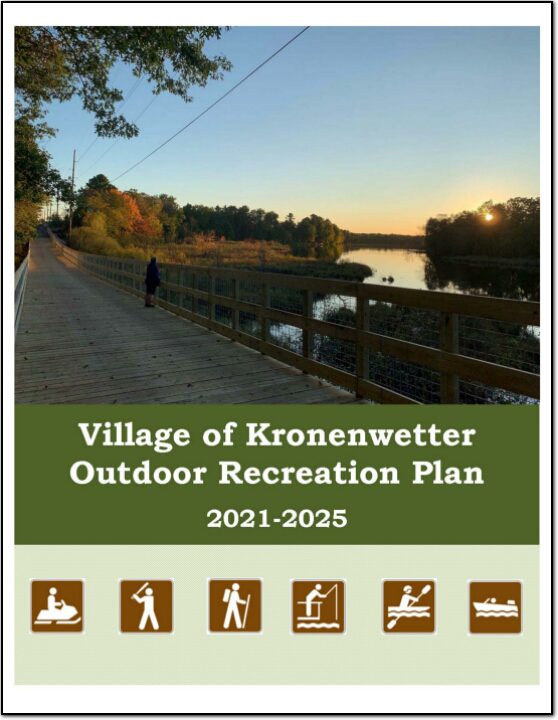
The primary purpose of this outdoor recreation plan is to provide continued direction toward meeting the current and future recreation needs of the Village of Kronenwetter.
This Outdoor Recreation Plan (ORP) was prepared pursuant to Wisconsin Statute §23.30 Outdoor Recreation Program. This section serves “to promote, encourage, coordinate, and implement a comprehensive long-range plan to acquire, maintain, and develop for public use, those areas of the state best adapted to the development of a comprehensive system of state and local outdoor recreation facilities and services…”
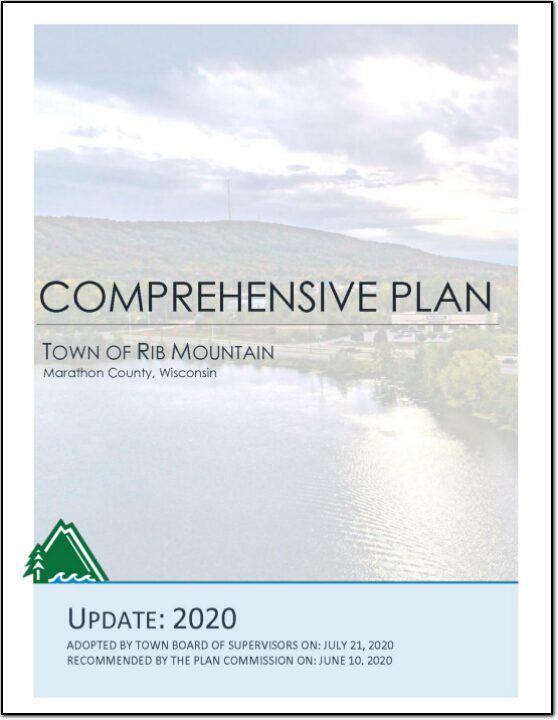
The Town of Rib Mountain’s Comprehensive Plan guides the future growth, development and enhancement of the Town for the next 10 to 20 years. This plan incorporates more than just future land uses, but also direction for housing and neighborhood development, economic development, transportation, community facilities, protection of natural resources and intergovernmental cooperation. These crucial elements among others will shape the future of the Town.
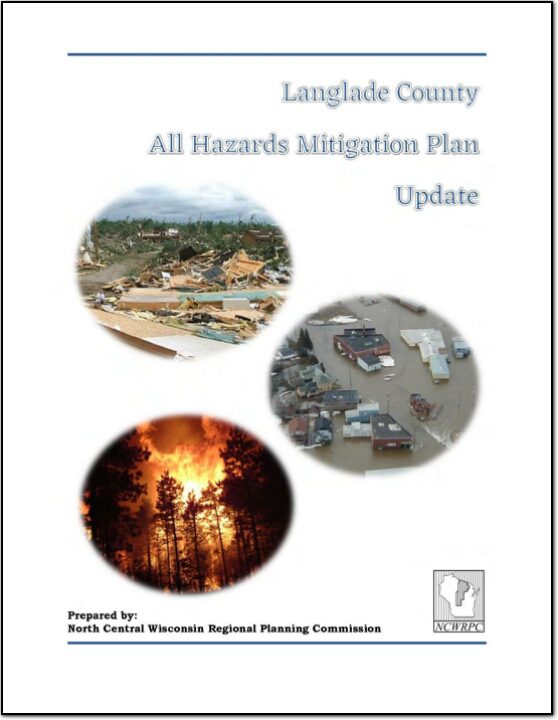
Langlade County All Hazards Mitigation Plan (AHMP) Update describes and documents the process used to develop the plan update. This includes how it was prepared and who (committee, organizations, departments, staff, consultants, etc.) was involved in the update process. It also describes the local government involvement, the time period in which the update was prepared, and who to contact to answer questions and make recommendations for future amendments to the plan.
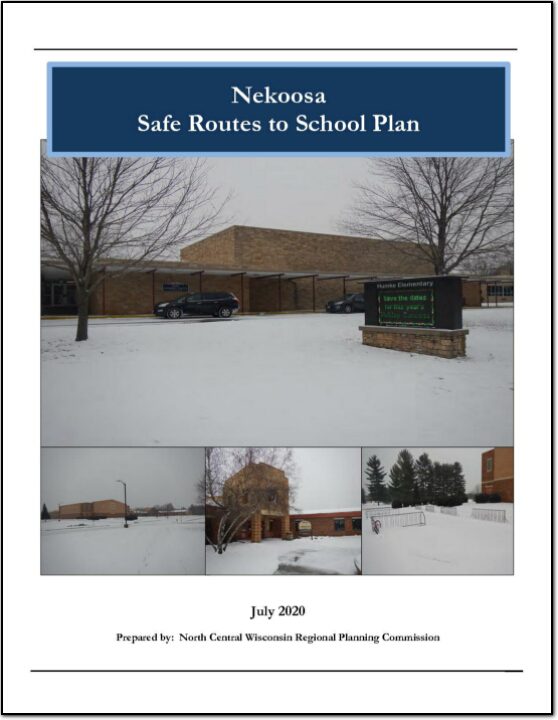
This plan was developed by NCWRPC in conjunction with the Nekoosa School District, City of Nekoosa, and the Nekoosa SRTS Task Force as part of the North Central Wisconsin Regional Safe Routes to School Program. This Regional program was made possible in part by a Transportation Alternatives Program grant from the Wisconsin Department of Transportation. Additional funding was provided by the NCWRPC.
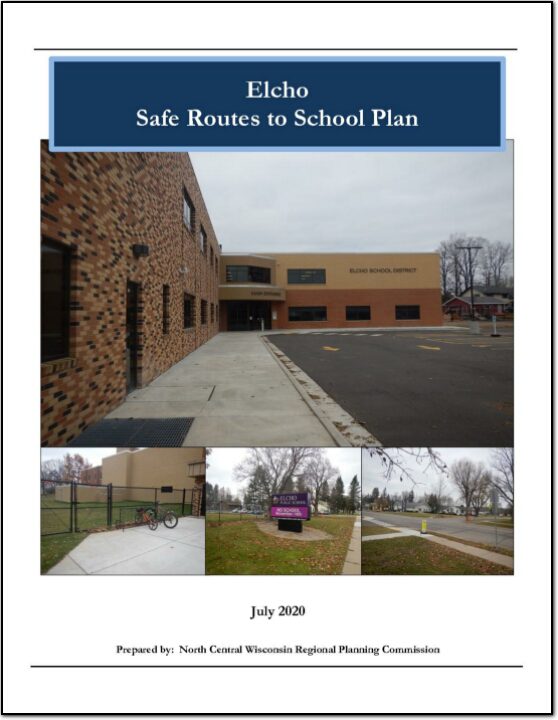
This plan was developed by NCWRPC in conjunction with the School District of Elcho, Town of Elcho, and the Elcho SRTS Task Force as part of the North Central Wisconsin Regional Safe Routes to School Program. This Regional program was made possible in part by a Transportation Alternatives Program grant from the Wisconsin Department of Transportation. Additional funding was provided by the NCWRPC.